Jan 23, 2026
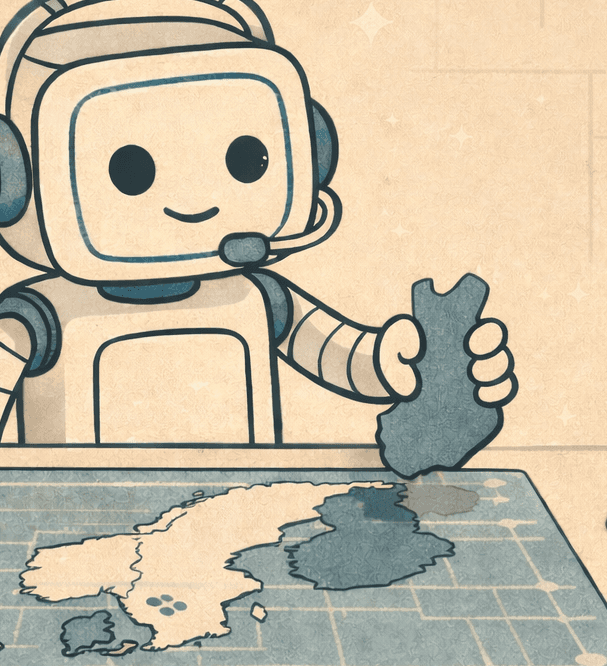
B2B tech companies entering the Nordics often hear that they face four different markets: Sweden, Denmark, Norway, and Finland. Four languages. Four media landscapes. Four strategies.
It's understandable. But it's not entirely accurate anymore.
In practice, B2B tech PR in the Nordics functions more as a coordinated market with local variations than five isolated ones. Not always and not blindly. But often enough that it becomes a real advantage to think that way.
The media reality
The Nordic tech and business media landscape is smaller than it appears from the outside. The number of media houses that actually matter for B2B tech is limited. And many journalists cover the same companies and trends across national borders. News does not neatly stay within national boundaries. Coverage in one country is read, referenced, and reshaped in others.
What does this mean for PR? You rarely pitch into five separate conversations. You pitch into a shared regional narrative with local nuances.
Coordinated storytelling beats fragmented execution here. Almost every time.
The buyer reality
Nordic B2B tech buyers operate in similar environments. They face comparable challenges: AI adoption, efficiency requirements, sustainability expectations, regulatory compliance, and increasingly complex buying behaviors and journeys.
The roles differ slightly between markets. But the questions are strikingly similar. How does this integrate? Is it safe? Does it meet the requirements? Does it scale? What is the actual impact?
This enables the building of a core narrative that works across the entire region. You do not need to reinvent the story country by country.
The size of the market
Individually, the Nordic countries may feel small. Especially for global tech companies used to significantly larger markets.
But together, the Nordic countries form a whole that is large enough to warrant real focus. The Nordics, for example, have high digital maturity and are a strong benchmark for other markets, especially regarding new tech trends. The Nordics become strategically interesting for many B2B tech brands when treated as a unified market.
PR works better when it reinforces the collective signal. Diluting it over four disconnected and completely separate efforts only makes everyone's job harder.
How the work actually functions today
Translation, distribution, and coordination used to be expensive and slow. They are no longer.
Modern tools and distributed teams make it easy to translate and adapt content quickly, coordinate outward efforts across markets, and maintain a consistent narrative without central bottlenecks. What once justified completely separate national strategies is no longer a real limitation.
AI is changing this as well
AI not only speeds up execution. It changes how regional PR can be designed from the outset.
Test messages across markets before launch. Tailor pitches to different media logics. Coordinate outward efforts without duplicating work. All of this is becoming easier. And it strongly benefits a model built around a shared narrative with local execution, rather than five parallel strategies doing the same thinking five times over.
AI rewards clarity and structure. Fragmentation undermines both.
But there are of course exceptions
But there are, of course, exceptions that confirm the rule.
Political events, regulatory changes, labor conflicts, local crises. These may require immediate, market-specific assessment. Cultural sensibility still matters. Local trust still matters. Local credibility still matters.
This is where purely centralized models fail. The mistake is not believing in a Nordic strategy. The mistake is thinking that the strategy removes the need for local expertise. It certainly does not.
The crux of the matter.
The real choice is not between one market or four. The choice is between four separate stories competing with each other, or one cohesive story applied with local judgment when it actually matters.
For B2B tech companies, the smartest path is often neither full centralization nor full localization. It is a shared narrative, executed with enough flexibility to mean something locally.